

Whiplash is often treated like a soft tissue injury.
Ice it. Stretch it. Strengthen it.
And sometimes that helps… a little.
But if you’ve worked with enough people, you already know the truth: many never fully recover. The pain lingers. The neck stiffens. The nervous system feels “off.” Something deeper is being missed.
From the perspective of a living systems approach, whiplash is not just a neck injury—it is a disruption of motion and communication throughout the entire system.
What Actually Gets Affected
When the head is rapidly accelerated and decelerated, several key systems are impacted simultaneously:
-
The upper cervical joints (occiput–C1–C2) lose their precise, subtle motion
-
The dural system and spinal cord experience a sudden tensile load
-
The brainstem region can become restricted within its surrounding tissues
-
The body adapts globally, often creating compensations far from the neck
This is why someone can have ongoing symptoms long after the initial tissue damage should have healed.
Because it’s no longer just about tissue.
It’s about lost motion and altered signaling.
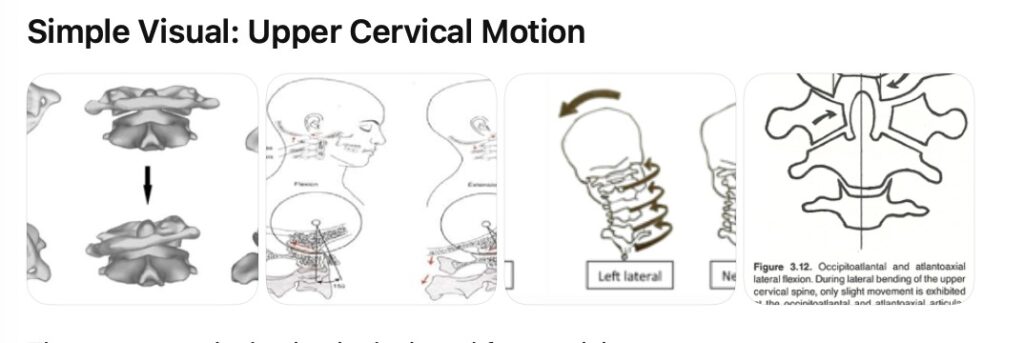
The upper cervical spine is designed for precision:
-
Occiput–C1: gentle flexion/extension (“yes”)
-
C1–C2: rotation (“no”)
After whiplash, these motions often become compressed, asymmetric, or guarded.
When that happens, the body doesn’t just lose range—it loses clarity of input to the nervous system.
The Overlooked Piece: The Spinal Cord Glide
One of the most important—and most ignored—elements is the ability of the spinal cord to glide freely within the canal.
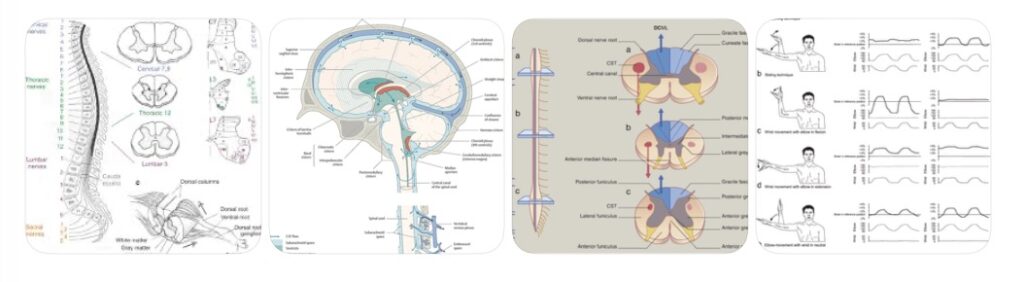
With normal movement:
-
The spinal cord subtly lengthens and shortens
-
The dura adapts to motion without resistance
-
The system remains fluid and responsive
After whiplash:
-
This glide can become restricted
-
Tension patterns can persist through the entire system
-
The nervous system operates in a slightly protective, altered state
You can stretch muscles all day—but if the neural system can’t move, the body will never fully settle.
Why the Brainstem Matters
The brainstem sits at the junction of the skull and spine—a critical relay station for:
-
Autonomic regulation
-
Muscle tone
-
Coordination and balance
When the surrounding tissues lose mobility, the system can become subtly dysregulated.
This is where people report things like:
-
Persistent tension
-
Dizziness or “off” balance
-
Fatigue that doesn’t quite make sense
Not dramatic. Just… not right.
The Goal of Treatment
The goal is not to force change.
It is to listen, identify, and restore.
Using a structured assessment process, we can:
-
Locate the primary restriction driving the pattern
-
Restore motion to the upper cervical joints
-
Improve the glide of the spinal cord and dural system
-
Reduce tension around the brainstem and central axis
When the right area is addressed, the body often reorganizes quickly—sometimes in ways that surprise both practitioner and client.
Because the system was never broken.
It was just stuck.
A Different Way to Think About Healing
The body is not a collection of parts to fix.
It is a living, adaptive system.
When motion is restored:
-
Joints communicate clearly
-
The nervous system settles
-
Compensation patterns unwind
And healing becomes less about effort…
and more about allowing the body to do what it was designed to do all along.
If you work with whiplash cases, the question isn’t “What tissue is damaged?”
It’s: